



✅ Key Takeaways
- Tawbah (repentance) applies to our digital lives just as much as our physical lives.
- True repentance involves four conditions: stopping the sin, feeling regret, resolving not to return, and restoring rights.
- Common digital sins include consuming haram content, online backbiting, cultivating envy, and wasting time.
- Practical digital Tawbah requires immediate actions like deleting apps, unfollowing harmful accounts, and blocking bad sites.
- Using tools built with Islamic values, like Kahf Browser, helps create an environment where righteousness is easier.
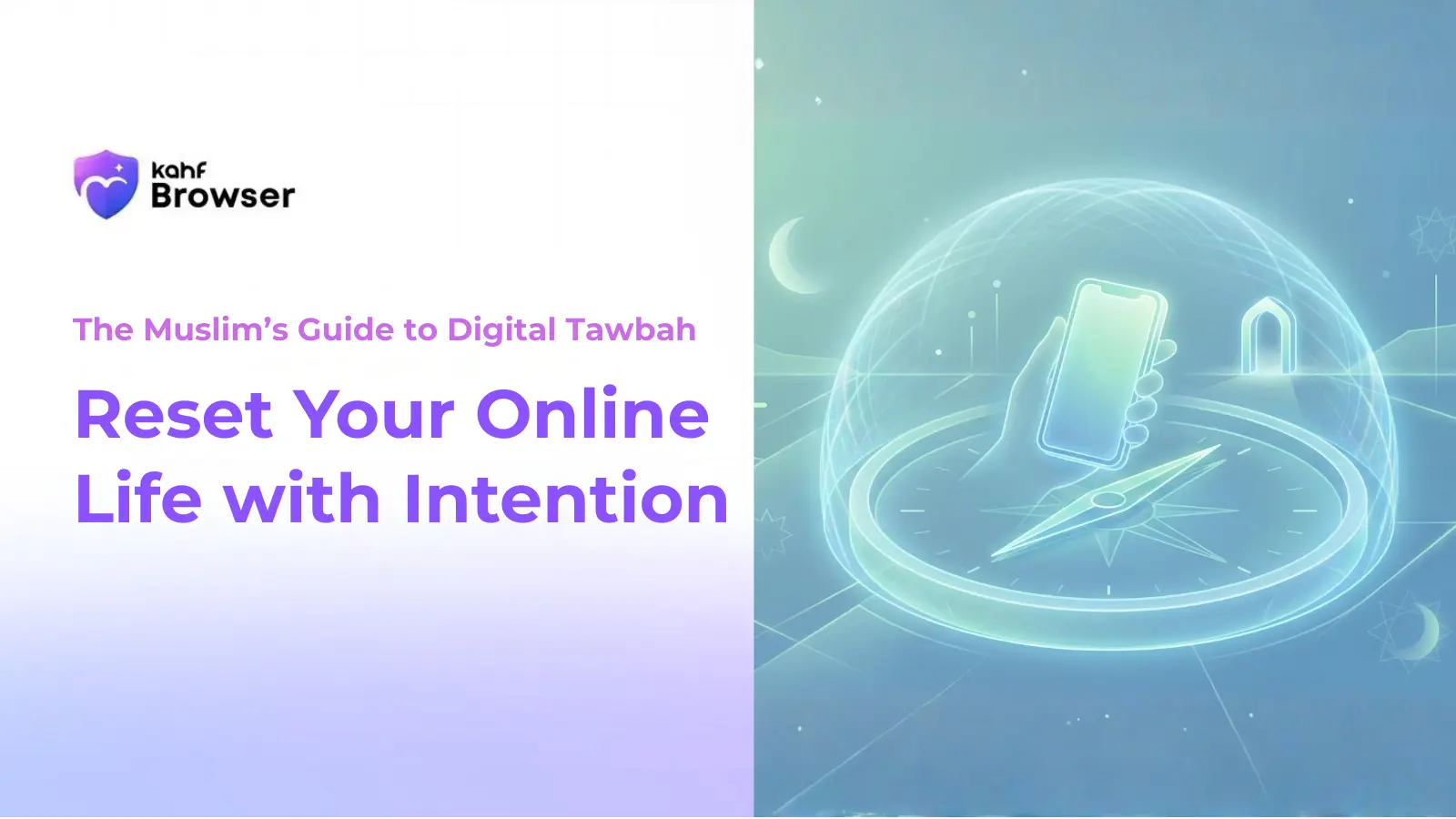
The Muslim’s Guide to Digital Tawbah: A Fresh Start in the Online World
In the quiet glow of a screen, long after the world has gone to sleep, we’ve all been there. An aimless scroll turns into a detour down a questionable path. A heated comment section baits us into typing words we don’t truly mean. A moment of weakness leads to viewing content that pricks our conscience. In the digital age, the avenues for missteps are abundant, and the feeling of spiritual disconnect that follows is a heavy burden for any believer to carry.
But the beauty of Islam is its profound emphasis on mercy and renewal. Allah (SWT) has given us a powerful gift to wipe our slates clean: Tawbah, or sincere repentance. This isn’t just about our offline actions; it’s a timeless principle that applies directly to our modern, digital lives. This guide is here to walk you, with empathy and support, through the process of digital Tawbah, helping you find your way back to a pure, faith-affirming online experience.
Understanding Tawbah: Islam’s Gift of a Fresh Start
Before we can apply repentance to our digital habits, we must understand its essence. Tawbah is not merely saying, “I’m sorry.” It is a conscious, sincere, and profound turning back to Allah (SWT). It is an acknowledgment of our human fallibility and an affirmation of Allah’s infinite mercy. The Quran is filled with reassurances of His willingness to forgive.
“Say, ‘O My servants who have transgressed against themselves [by sinning], do not despair of the mercy of Allah. Indeed, Allah forgives all sins. Indeed, it is He who is the Forgiving, the Merciful.'”
— Quran (39:53)
| Condition of Tawbah | Description |
|---|---|
| Al-Iqla’ (Giving Up the Sin) | Immediately ceasing the sinful action and distancing oneself from anything that leads back to it. |
| An-Nadam (Regret) | Feeling genuine remorse and sorrow in the heart for having disobeyed Allah. |
| Al-‘Azm (Resolve) | Making a firm and sincere intention never to return to the sin again, supported by practical safeguards. |
| Restoring Rights (if applicable) | If another person was harmed—such as through gossip or online abuse—seeking their forgiveness and restoring their rights. |
Our Digital Ummah: Applying Timeless Principles to Modern Sins
The landscape of sin has expanded with technology, but the underlying principles remain the same. What was once whispered gossip in a courtyard is now a viral post. What was once a forbidden glance is now an endless stream of haram content.
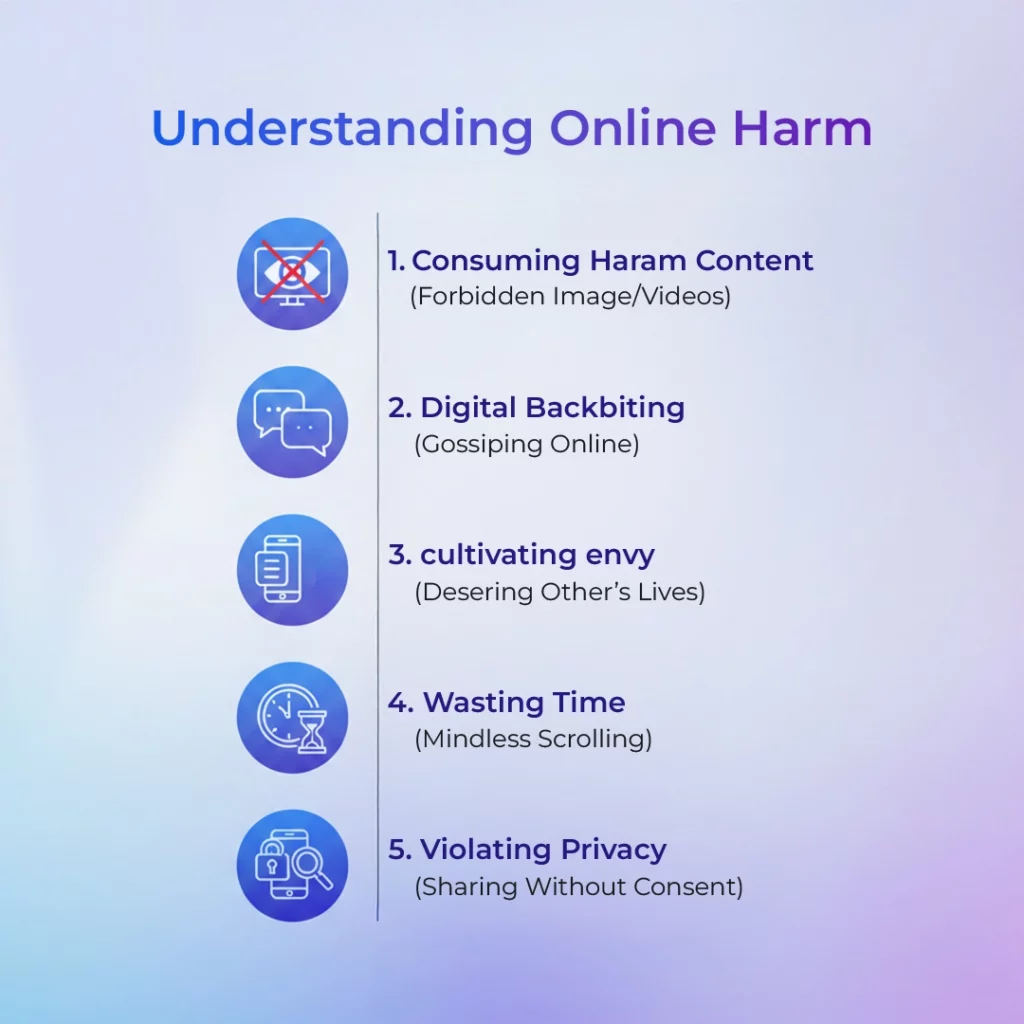
Common Digital Sins Include:
👁️ Consuming Haram Content
Viewing nudity, listening to music with foul lyrics, or reading material that promotes disbelief and vice.
🗣️ Digital Gheebah (Backbiting)
Sharing screenshots, participating in gossip threads, or slandering others on social media.
💔 Cultivating Envy and Discontent
Endlessly scrolling through curated, perfect-looking lives, leading to dissatisfaction with Allah’s blessings in our own.
⏳ Wasting Precious Time
Losing hours, days, and weeks to mindless entertainment and scrolling, time that could have been spent in worship or other productive acts.
🔒 Violating Privacy
“Stalking” profiles of non-mahrams or looking for the faults of others.
Recognizing these actions as sins is the first step toward seeking repentance from them.
A Practical Guide: Your 5 Steps to Digital Repentance
Feeling the weight of these digital missteps is a sign of a living heart and a healthy Iman. The path back is clear and accessible to all. Here is how you can apply the conditions of Tawbah to your online life.
Acknowledge and Regret
Take a moment for honest self-reflection. Acknowledge the specific digital sins you have engaged in without shaming yourself. Regret the action because it displeased the One who created you and loves you most.
Cease the Digital Sin
This requires decisive action. Delete the apps that are consistent sources of fitnah. Unfollow accounts that promote haram. Block websites that lead you astray, or simply find the strength to close the browser tab.
Make a Sincere Du’a of Repentance
Turn to Allah with humility. Ask for His forgiveness in your own words. You can also perform Salat al-Tawbah (the Prayer of Repentance) as recommended by the Prophet (PBUH).
Resolve Never to Return
Make a firm, heartfelt intention that you will not willingly return to this digital sin. This resolve is what Allah judges. Implement practical safeguards to protect your intention.
Replace Bad Habits with Good Ones
Nature abhors a vacuum. If you spent an hour scrolling, replace it with an hour of listening to an Islamic lecture, reading the Quran, or learning something beneficial.
Building a Halal Digital Life: Your Fresh Start with Kahf
Repentance is not just about stopping a sin; it’s about embarking on a new, better path. It’s about creating an environment where righteousness is easy and sin is difficult. This is where your tools matter. Making a fresh start is the perfect time to change your digital environment, and Kahf Browser is designed to be your companion on this journey.
Using a tool built with your values in mind is a powerful part of your commitment. It’s a practical step that reinforces your resolve.
🛡️ AI-Powered Content Filtering
Kahf Browser acts as your first line of defense, automatically filtering out nudity, explicit content, and other haram material before it even reaches your screen. This helps you uphold your commitment from Step 2.
🔒 Privacy Protection
Protect yourself from being tracked and targeted by ads that might lead to temptation. Kahf helps you browse with greater anonymity.
✅ SafeSearch Enforcement
Kahf enforces the highest level of SafeSearch, meaning that explicit search results are automatically hidden, providing a clean baseline for your online activities.
“Whoever says, ‘Subhan Allah wa bihamdihi,’ one hundred times a day, will be forgiven all his sins even if they were as much as the foam of the sea.”
— (Reported by Al-Bukhari)
Your New Digital Dawn
Every believer’s journey is marked by moments of strength and weakness. The digital world presents a unique and persistent test, but it also presents an opportunity: to prove our love for Allah by striving against temptation in a world saturated with it.
Your past digital mistakes do not define you. Your sincere repentance and your commitment to a new path are what matter to Allah. Embrace the gift of Tawbah, clean your digital slate, and walk forward with a lighter heart and a stronger faith.
📚 References
- Quran, Surah Az-Zumar (39:53)
- Hadith reported by Abu Dawood
- Hadith reported by Al-Bukhari
Frequently Asked Questions
What does Digital Tawbah mean?
What are the conditions of Tawbah in Islam?
How can a Halal browser help with Digital Tawbah?
What should I do if I repeat a digital sin after repenting?
Ready to begin your fresh start?
Download Kahf Browser to create a digital environment where righteousness is easy and sin is difficult.