



Common Internet Risks
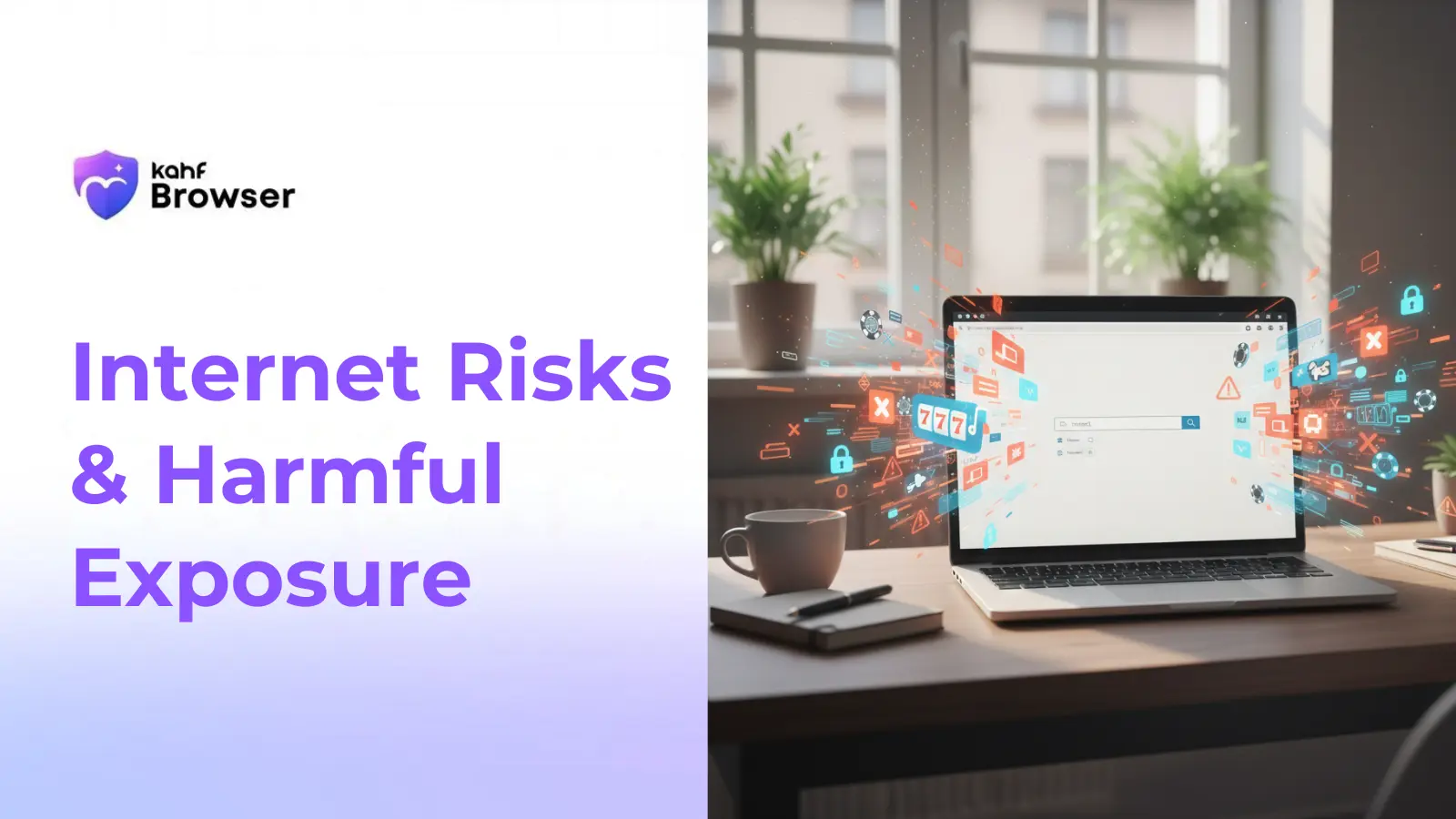
Internet risks span multiple categories, from accidental exposure to harmful content to targeted attacks on your personal data. Understanding each risk helps you take appropriate protective measures. As outlined in our complete safe internet guide, awareness is the first step toward protection.
Accidental Exposure
Encountering harmful content through search results, ads, or links without intentional seeking.
Data Tracking
Websites and advertisers collecting your browsing habits, location, and personal information.
Phishing & Fraud
Deceptive emails, messages, or websites designed to steal credentials or financial information.
Malware & Viruses
Malicious software that can compromise your device security and steal personal data.
Manipulation
Algorithmic systems designed to exploit psychological vulnerabilities and encourage harmful behavior.
Identity Theft
Criminals using stolen personal information to commit fraud or access sensitive accounts.
Accidental Exposure to Harmful Content
One of the most common internet risks is accidental exposure to inappropriate content. This can happen through search results, advertisements, or links shared on social media. Unlike intentional seeking, accidental exposure can occur without warning.
Children are particularly vulnerable to accidental exposure, as they may not understand the implications of what they encounter. Even innocuous searches can return unexpected results. This is why intelligent content filtering is essential for families.
Data Tracking and Privacy Violations
Nearly every website and app tracks your behavior. Your browsing history, location, search queries, and even the time you spend on pages are collected and analyzed. This data is valuable—it's used to target you with ads, manipulate your behavior, and sometimes sold to third parties.
Most users don't realize the extent of tracking. When you see an ad for a product you recently searched for, that's tracking in action. This creates a privacy violation that many find disturbing, especially when sensitive searches are involved. Learn more about this in our guide on privacy, tracking, and ethical safety.
Phishing and Fraud
Phishing attacks use deceptive emails, messages, or websites to trick users into revealing passwords, credit card numbers, or other sensitive information. These attacks are increasingly sophisticated and can fool even careful users.
Common phishing tactics include fake login pages, urgent messages claiming account problems, and offers that seem too good to be true. Once attackers have your credentials, they can access your accounts and steal your identity.
Malware and Viruses
Malicious software can infect your device through downloads, infected websites, or email attachments. Once installed, malware can steal your data, monitor your activity, lock your files for ransom, or use your device to attack others.
Modern browsers include protections against known malware, but new threats emerge constantly. This is why keeping your browser and operating system updated is crucial.
Algorithmic Manipulation
Social media platforms and content sites use algorithms designed to maximize engagement, often by exploiting psychological vulnerabilities. These systems can encourage addiction, spread misinformation, and amplify extreme content.
Young people are particularly vulnerable to algorithmic manipulation, which can affect mental health, self-esteem, and decision-making. Understanding how these systems work is the first step toward resisting their influence.
Identity Theft
When criminals obtain your personal information, they can use it to open accounts, make purchases, or commit fraud in your name. Identity theft can take years to resolve and cause significant financial and emotional damage.
Protecting your personal information online is essential. This means using strong passwords, avoiding sharing sensitive data unnecessarily, and being cautious about what information you provide to websites.
Who Is Most Vulnerable?
Children and Adolescents
Young people face multiple vulnerabilities: developmental factors make them more susceptible to manipulation, they're more likely to encounter harmful content accidentally, and they may not understand the implications of sharing personal information. Learn more about protecting children in our guide on safe internet for families and children.
Older Adults
Older adults are frequently targeted by scams and fraud schemes. They may be less familiar with online threats and more trusting of official-looking communications. Family support and education are important for protecting this population.
Everyone
Internet risks affect all users regardless of age or experience. Even tech-savvy individuals can fall victim to sophisticated phishing or data breaches. This is why comprehensive protection is important for everyone. Our guide on safe internet for individuals covers personal protection strategies in detail.
How Risks Spread
Harmful content spreads through multiple channels: search results, social media recommendations, email, messaging apps, and advertising networks. Each channel presents different risks and requires different protective approaches.
Understanding how risks spread helps you take targeted protective measures. For example, if you're concerned about accidental exposure, intelligent content filtering is most important. If you're concerned about data tracking, privacy protection is essential.
Taking Action
Recognizing internet risks is the first step. The next step is taking action through:
- Using a browser designed for safety and privacy
- Enabling family controls and content filtering
- Keeping software and devices updated
- Using strong, unique passwords
- Being cautious about sharing personal information
- Educating yourself and your family about online threats
Kahf Browser combines intelligent content filtering, zero data collection, and family safety features to address multiple internet risks simultaneously. Learn more about what makes the internet safe.
Related Reading
What Is a Safe Internet? Definition & Guide
A safe internet is more than just technical security. It's a digital environment where users can browse with confidence, protected from exploitation, manipulation, and harm...
Safe Internet for Individuals: Your Personal Protection Guide
Whether you're a student, professional, or casual user, protecting yourself online is essential. Learn practical strategies and tools to browse safely...
Privacy, Tracking & Ethical Safety: Complete Guide
Privacy is not just a preference—it's fundamental to internet safety. Understand how tracking works, why it matters, and how to protect your data...
Frequently Asked Questions
How common is harmful content exposure online?
Can I completely avoid online risks?
What's the difference between online risks for adults and children?
How do I know if my data has been tracked?
Protect Yourself from Internet Risks
Download Kahf Browser and get intelligent protection against harmful content, data tracking, and online threats.
Download Free